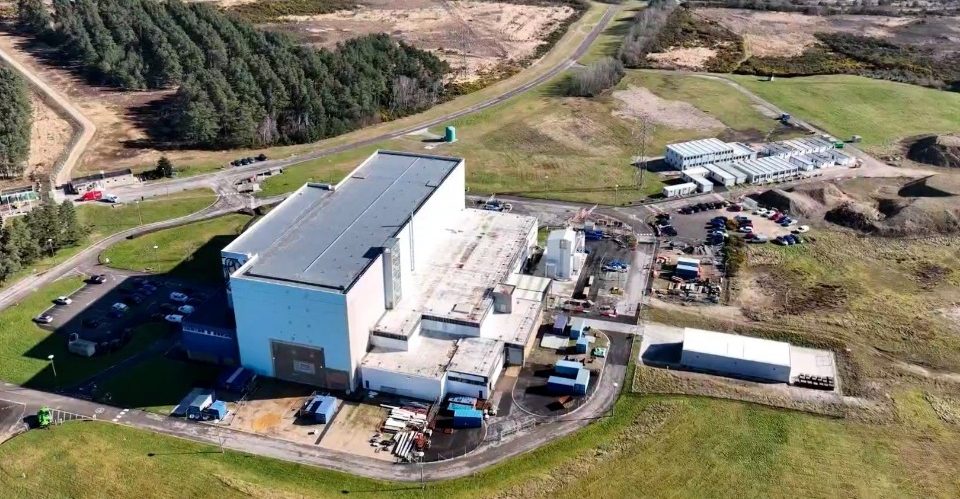
The Steam-Generating Heavy Water Reactor (SGHWR) at Winfrith once exported up to 100 MW of electric power to the National Grid and for many years was the largest water-cooled reactor in the United Kingdom. It is now under ownership of the Nuclear Decommissioning Authority (NDA) and is undergoing decommissioning.
Tenet were engaged to design the CE&I infrastructure to enable decommissioning of the now de-fuelled SGHWR reactor and associated buildings.
CE&I systems designed by Tenet to support the decommissioning were:
Building electrical power supplies and temporary construction supplies.
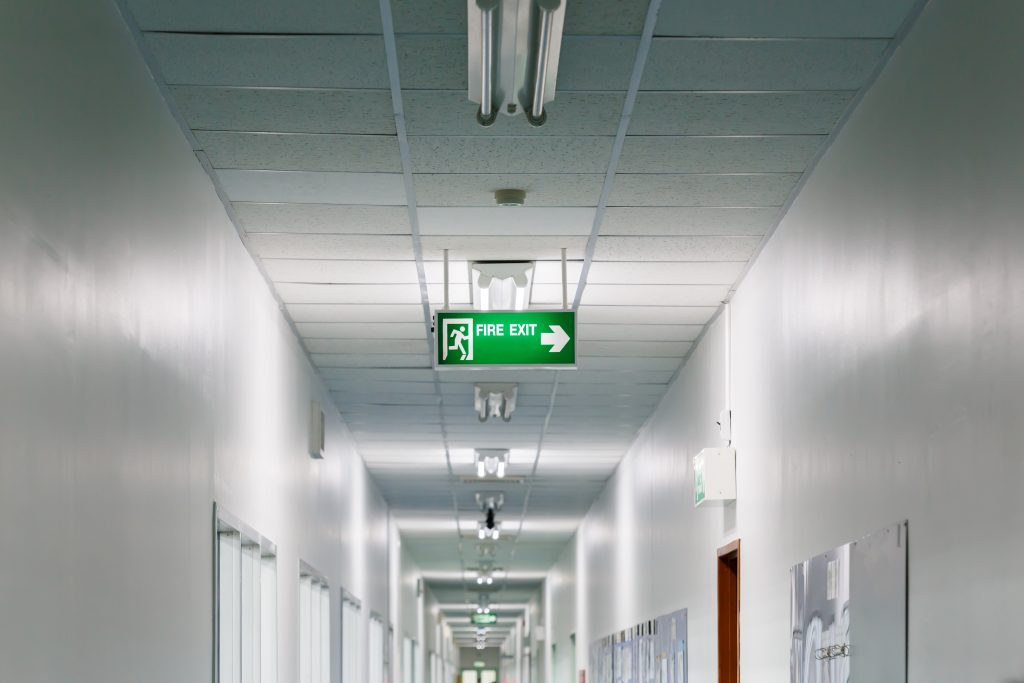
General lighting and emergency lighting.
Fire detection and alarm systems.
Radiometric detection and reporting systems.
Problems associated with the building included:
Legacy electrical infrastructure to be accounted for during load calculations and installation.
Presence of asbestos and contamination in classified areas.
Compliance with CDM when installing infrastructure in buildings that predates CDM legislation.
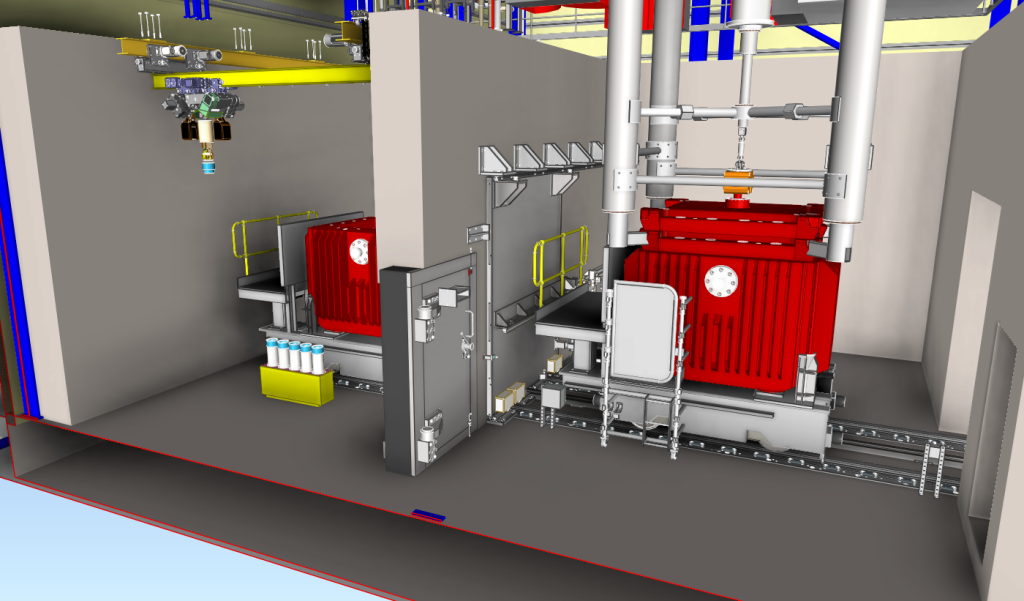
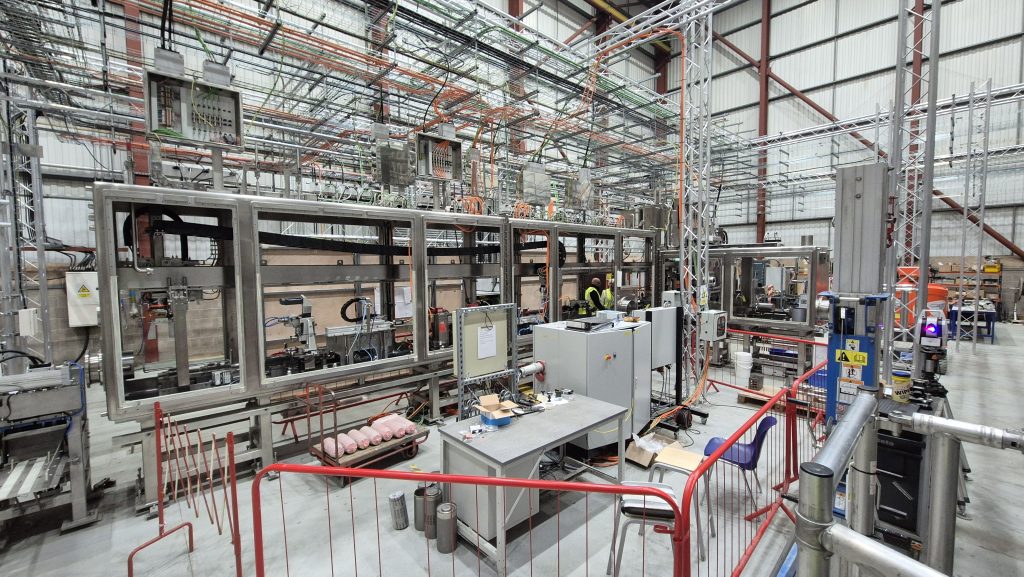
Designing the infrastructure to support remote manipulators which deploy cutting equipment and the maintenance of the equipment.
Services
Utilising 3D models of the building Tenet produced detailed designs for the CE&I systems. The design team engaged with the client, building stake holders and equipment vendors during this process to enable smooth delivery of the final designs and ensure safe installation.
The lighting design was modelled in ReLux by Tenet to ensure compliance with general lighting and emergency lighting legislation, and to provide adequate lighting for the remote manipulator operations. Lighting distribution panels were designed to allow the remote manipulator operatives full control of the core lighting during decommissioning activities.
The new decommissioning electrical infrastructure was modelled in Trimble and detailed design documents and drawings were produced including layouts, wiring diagrams, schematics, installation general arrangements, procurement specifications and calculation reports.
the challenge
The building layout was originally designed around the SGHWR and as such offered challenges regarding personnel access, movement of large machinery, cable routes and classified areas. Constructability was a large consideration during the design process with safe installation, maintenance and deconstruction of the CE&I systems being paramount. Regular consolations with the client and construction teams were carried out to ensure CDM was considered at every stage of the process when selecting and positioning equipment.
Our solution
Tenet worked in partnership with the client program managers to review and update the delivery program as the project developed and delivered all documentation to the client on time.
The design deliverables were reviewed and accepted by the client prior to the commencement of construction.
The outcome
The success to this project was dependent upon encouraging a positive working environment. Tenet established a good working relationship with the client team which enabled a collaborative approach to a challenging project.
By using suitably qualified and experienced engineers, Tenet was able bring together a project team that could deliver the design to the client and ensure safe installation and operation.